
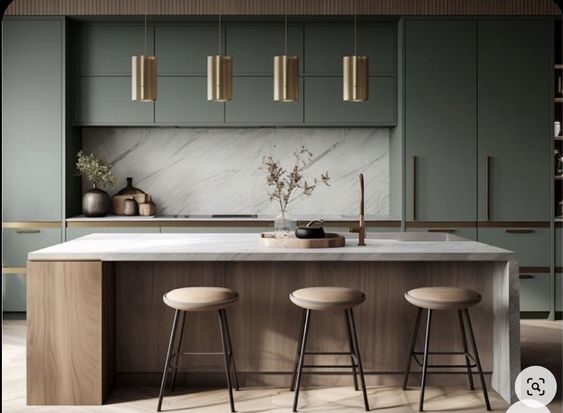
A dark kitchen does not need colour to be interesting, but a single muted tone can lift the whole composition if it is mixed properly.
Most of my work sits in smoked oak, walnut and near-black lacquer. When colour appears, it appears once, and it is muted enough to read as a material rather than a statement.
Sage, clay, dusty rose and bone all behave well next to brass. They hold their character under warm light instead of turning acid the way a saturated tone will.
Mixing rather than picking
A lacquer sampled from a fan deck under showroom lighting almost never survives contact with a real room. I mix to sample, spray a full door, and stand it in your kitchen at three different times of day before anything is committed.
One note, not three
The discipline is knowing where the colour stops. Tall units and the island stay dark, the colour takes a single run, and the metals carry the warmth. Add a second colour and the room starts to explain itself instead of simply working.
Keep reading
Why a three millimetre reveal changes a whole room
The gap between two doors is not a tolerance. It is a decision, and it sets the rhythm of everything you look at afterwards.
MaterialChoosing a slab: veining, book-matching and the cut you cannot undo
Stone is bought by the piece, not the square metre. Standing in the yard with a marker is the most important hour of the project.