
Choosing a slab: veining, book-matching and the cut you cannot undo
Material · 10 July 2026 · 6 min read
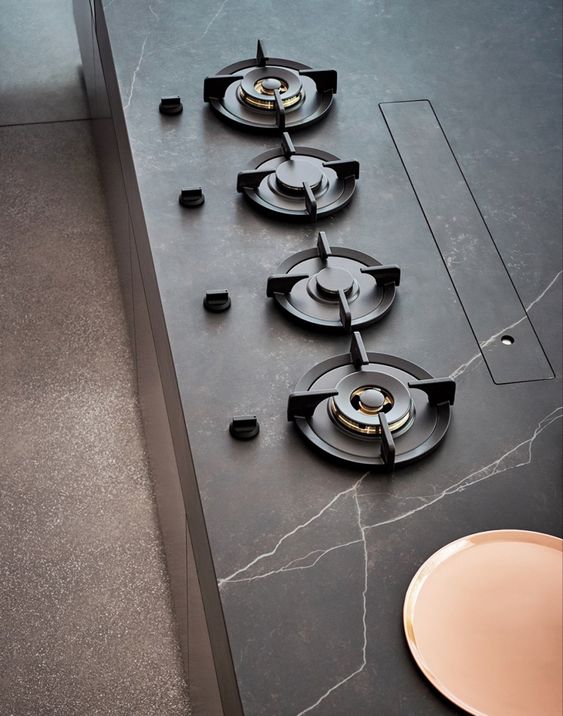
Stone is bought by the piece, not the square metre. Standing in the yard with a marker is the most important hour of the project.
Every slab is a single event. The vein that runs through it happened once and will never repeat, which means the layout has to be drawn onto the stone itself before a saw is switched on.
I mark the island first, because it is the piece people stand around and touch. Everything else is cut from what remains, and the offcuts are planned into the splashback so the movement continues upward instead of stopping at the worktop.
Honed, not polished
A polished finish throws light back at you and shows every fingerprint. Honed stone absorbs the room instead, and the veining reads as depth rather than gloss. In a dark kitchen it is the difference between a surface and a shadow.
Edges and mitres
A twenty millimetre slab mitred to a sixty millimetre edge gives weight without mass. The mitre has to be glued so the vein carries around the corner, which only works if the fabricator knows the layout you drew in the yard. This is why I go to the cutting, not just the choosing.
Keep reading
Why a three millimetre reveal changes a whole room
The gap between two doors is not a tolerance. It is a decision, and it sets the rhythm of everything you look at afterwards.
HardwareThe part of a kitchen you touch a hundred times a day
Doors and drawers are the interface. Specifying the motion once, and never substituting it, is the least glamorous luxury in the room.