
Design notes
Modern kitchen design, decision by decision
Most kitchens described as modern are simply new. What makes one still look considered in a decade is a short list of decisions taken in the right order, long before anybody chooses a colour.
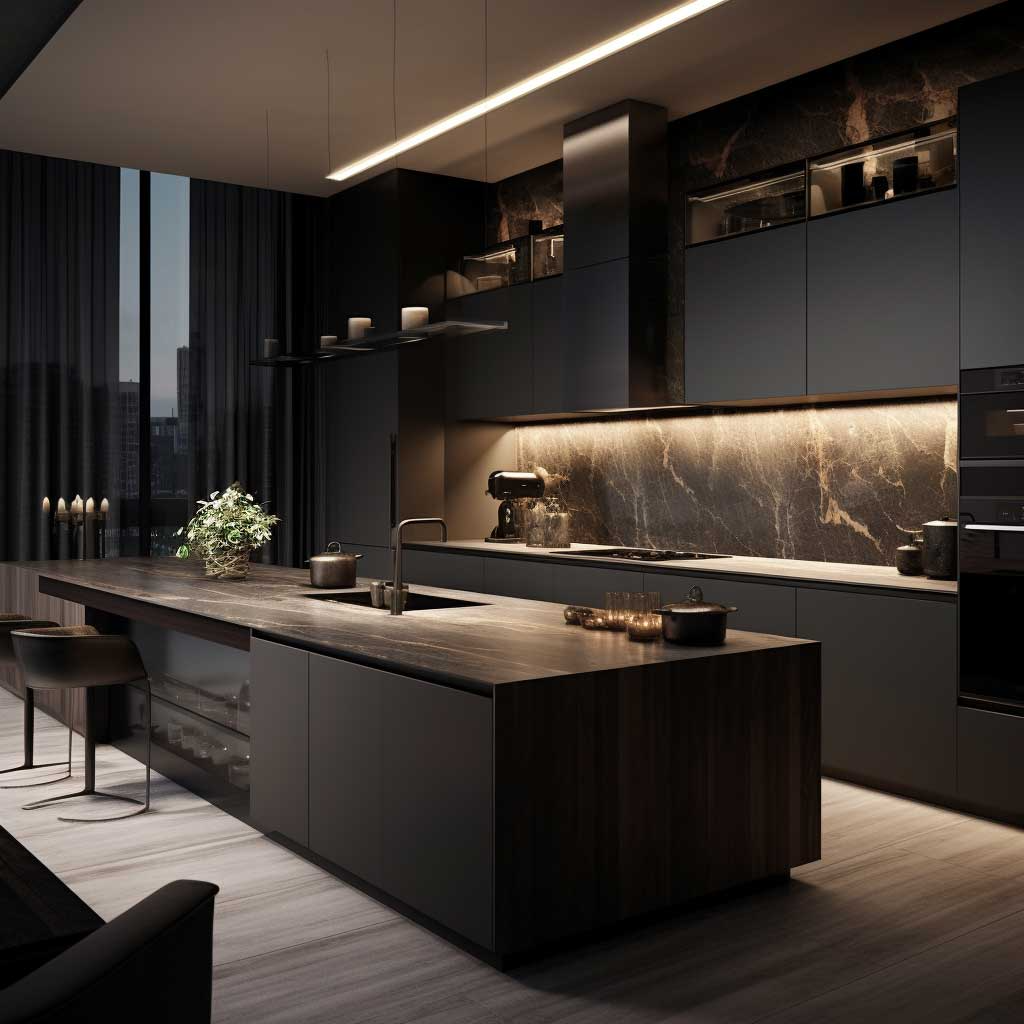
Six decisions, in order
Where you stand
Modern kitchens are usually open to a living space, which means you cook with your back to guests or facing them. That one choice fixes the island, the extraction route and the position of the sink. Everything else follows it.
Proportion before finish
A room reads as expensive when the horizontals line up. Drawer heights in a consistent rhythm, one reveal dimension used everywhere, a plinth deep enough to put the volume in shadow. None of that costs a premium finish.
How much you hide
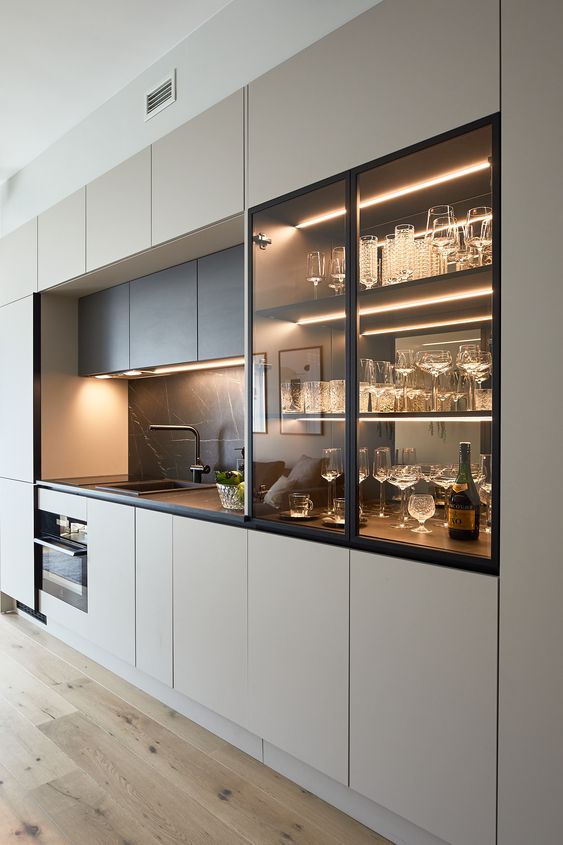
Fully integrated appliances give the calmest elevation but demand more joinery. A tall bank that swallows the coffee machine, toaster and kettle is often worth more to daily life than another metre of open shelf.
Handles, or none
A handleless run is the cleanest thing a modern kitchen can do and the least forgiving. It needs machined reveals and assisted motion, otherwise you spend years pushing a door that does not want to open.
Palette and one soft note
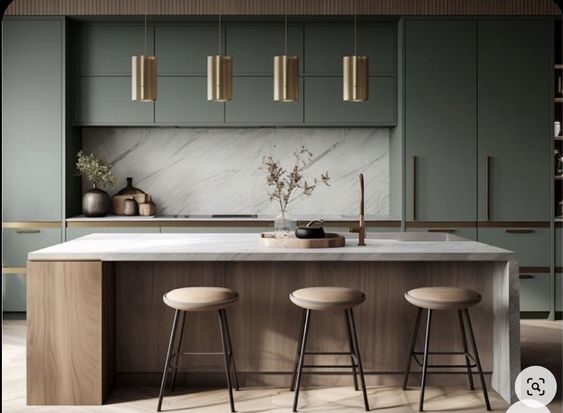
Dark timber and stone carry a room. A single restrained accent, brass, copper or a pastel front on one volume, gives the eye somewhere to rest without turning the kitchen into a colour scheme.
Light for the hands
Lit for cooking first: continuous light onto the worktop, nothing that glares off a matte front, and warmth that does not turn timber grey after dark.
Where modern kitchens go wrong
- Choosing the finish before the layout, then bending the plan to keep it.
- Mixing three reveal dimensions in one room, which reads as untidy even when every piece is well made.
- Specifying a handleless design with ordinary hardware, so the detail survives the drawing but not the living.
- Buying a dramatic slab without seeing where the cut will fall on the island.
- Treating the scullery as leftover space, when it is what keeps the main room quiet.