
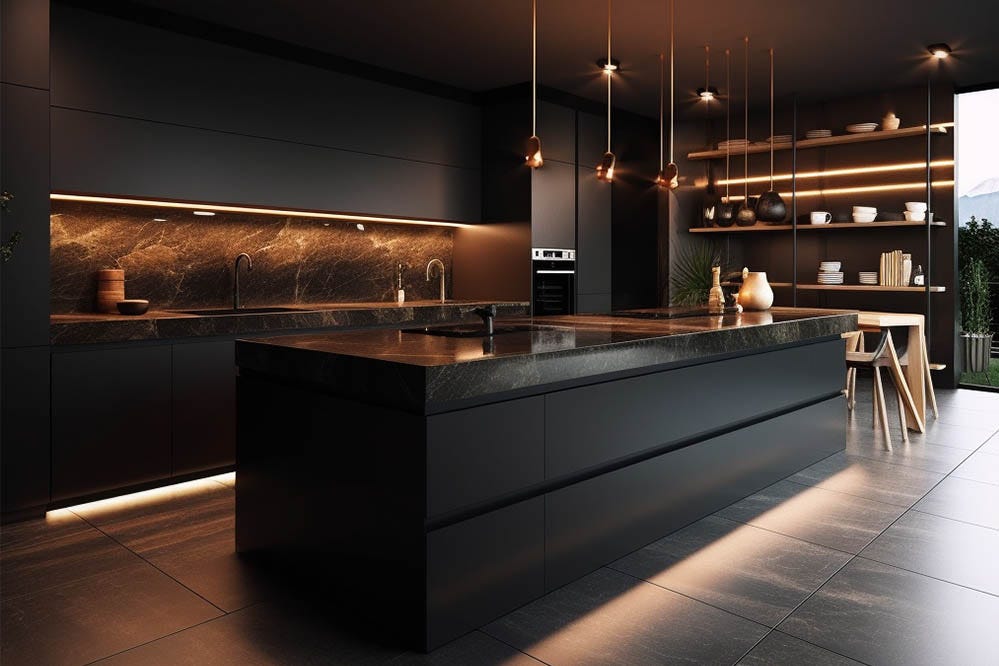
Linear light under a shelf, a warm colour temperature and no bright spot in the eye line. Most kitchens are lit for photographs instead of for cooking.
Light does two jobs in a kitchen. It lets you see a knife edge on a dark worktop, and it decides how the materials behave once the sun has gone. Those jobs need different fittings.
Task light belongs recessed into the underside of the wall units, continuous rather than dotted, so there are no scalloped pools across the stone.
Temperature and dimming
I hold everything to a warm output, close to 2700 kelvin, and put it on a dimmer that reaches genuinely low. Timber and brass need warmth to look like themselves. Cool light makes smoked oak look grey and turns brass green.
Hiding the source
If you can see the diode, the detail has failed. A shadow gap, a returned edge or a shallow rebate gives the light somewhere to live so what you notice is the glow on the splashback and not the fitting that made it.
Keep reading
Why a three millimetre reveal changes a whole room
The gap between two doors is not a tolerance. It is a decision, and it sets the rhythm of everything you look at afterwards.
MaterialChoosing a slab: veining, book-matching and the cut you cannot undo
Stone is bought by the piece, not the square metre. Standing in the yard with a marker is the most important hour of the project.